Uncategorized

5 Numbers Every Au Pair Driver Should Know

You already know how to drive, but now you’re in Illinois, the family has handed you the car keys, and part of your routine may include school drop-offs, pickups, soccer practice, playdates, appointments, and errands with children in the car.

That’s when a few numbers become especially important.

Some driving rules may be different from what you’re used to in your home country, and others are particularly relevant when children are your passengers. 

So before your next school run, here are five numbers worth remembering.

1. 20 MPH: Think School Zones

If school pickup and drop-off are part of your Au Pair routine, 20 mph is a number you should recognize immediately.

In Illinois, the school-zone speed limit is 20 mph on school days between 6:30 a.m. and 4 p.m. when children are present and the appropriate signs are posted. Local conditions and posted signs still matter, so always pay attention to the specific road you’re driving on.

Why is this especially important for an Au Pair? Because school zones can be some of the busiest parts of your driving routine, you may have children crossing the street, parents stopping, school buses arriving, crossing guards directing traffic, and cars entering or leaving at the same time.

Au Pair Tip: Don’t wait until you reach the school entrance to start paying attention. Look ahead for school-zone signs and reduce your speed appropriately before entering the area.

And remember: the posted speed limit is a maximum under safe conditions, not a speed you must maintain regardless of traffic, pedestrians, or weather.

2. 30 MPH: A Number You’ll See Around Town

Under Illinois’ general speed limits, city and town areas are 30 mph unless otherwise posted, alleys are generally 15 mph, while higher limits apply to highways and interstates. 

Municipalities can also establish different posted limits, which is why the sign in front of you always matters.

For an Au Pair, this is especially relevant because much of your driving may happen on local streets rather than highways.

  • Home → school.
  • School → activity.
  • Activity → grocery store.
  • Grocery store → home.

These everyday routes can take you through residential neighborhoods, commercial streets, school areas, and alleys within the same trip.

Quick Tip: Don’t assume the speed limit stays the same just because you’re still in the same neighborhood. 

Get into the habit of actively looking for posted speed-limit signs as the road environment changes.

3. 3 Seconds: Don’t Follow Too Closely

How much space should you leave between your vehicle and the one ahead? Instead of trying to estimate a distance in feet while you’re driving, Illinois’ Rules of the Road recommends an easier method: The three-second rule.

Choose a fixed object ahead, such as a road sign or tree. When the vehicle in front passes it, begin counting. Your vehicle shouldn’t reach that same point before approximately three seconds have passed.

And three seconds is for good road and weather conditions. 

If conditions aren’t good, Illinois recommends increasing your following distance even more.

That’s particularly important in Chicago, where rain, snow, ice, and reduced visibility can completely change how much time a vehicle needs to stop.

Au Pair Tip: If you’re driving children, smooth driving matters too. More following distance gives you more time to react and can reduce the need for sudden braking.

4. Under 8: Think Child Restraint

If you’re going to drive children as part of your Au Pair responsibilities, this is one of the most important numbers on the list.

In Illinois, children under age 8 must be properly secured in an appropriate child safety restraint system under the Child Passenger Protection Act. 

That can include a car seat or booster depending on the child’s age, size, and the manufacturer’s requirements.

There’s an additional rule worth knowing for very young children: children under age 2 must generally ride in a rear-facing child restraint unless they weigh 40 pounds or more or are 40 inches or taller.

Before driving the host family’s children, ask: Which seat belongs to each child? Has it been properly installed? What are the family’s instructions for securing each child?

Never guess because you’re running late, a school pickup can wait another minute. Proper restraint shouldn’t.

5. Through Age 12: The Back Seat Is the Safer Place

Here’s another number that’s particularly relevant when your job includes transporting children.

Illinois’ official child passenger safety guidance recommends keeping children in the back seat at least through age 12.

This is an important distinction: it’s a safety recommendation, not the same thing as saying Illinois law universally prohibits every child 12 or younger from sitting in front.

Air bags are one of the reasons the back seat matters, Illinois’ Rules of the Road warns that children riding in the front can be seriously injured by an air bag and recommends that children 12 and younger be properly secured in the back seat.

For an Au Pair, the simplest habit is to establish the seating plan with the host family before you begin driving regularly.

Bonus Number: 0 Passed School Buses

This isn’t technically a speed or distance, but it’s too important for an Au Pair to overlook.

When a school bus is stopped to receive or discharge students with its required signals activated, Illinois drivers generally must stop and may not proceed until the legal conditions for continuing are met.

If you’re new to driving in the United States, school-bus rules deserve special attention because they may work differently from what you’re accustomed to in your home country.

When you’re regularly driving to schools, parks, activities, and residential neighborhoods, you’re also more likely to encounter buses.

So add one more association to your mental cheat sheet: School bus + active stop signals = STOP.

Your Au Pair Driving Cheat Sheet

Before your next trip with the kids, remember:

  • 20 MPH → School zones when applicable
  • 30 MPH → General city/town limit unless otherwise posted
  • 3 SECONDS → Minimum following-distance rule in good conditions
  • UNDER 8 → Appropriate child restraint system required
  • THROUGH 12 → Back seat recommended
  • 0 → School buses you should try to pass when their stop requirements apply

Knowing these numbers doesn’t replace learning Illinois traffic laws, but they give you a useful starting point for some of the situations you’re likely to encounter while driving children.

And that’s really what adapting to driving as an Au Pair is about.

You don’t need someone to teach you from zero just because you came from another country, you may already be an experienced driver, what you need is the opportunity to understand what’s different here and practice those situations before they become part of your everyday responsibilities.

Nova’s Au Pair Driving Lessons can help you become more familiar with U.S. traffic rules, Chicago-area roads, school zones, parking, intersections, and other situations you may encounter while driving your host family’s vehicle.

Visit novadriving.com to learn more about Nova’s Au Pair Driving Lessons and prepare for the driving routine that comes with your new experience in the U.S.
Uncategorized

Drive. Earn. Help.

What if a skill you already use every day could become a new source of income? Non-Emergency Medical Transportation, or NEMT, is one career path where driving can become much more than a way to get from one place to another. 

Depending on the employer, experience, and position, NEMT drivers may earn approximately $18–$25 per hour* while helping passengers reach medical appointments, treatments, rehabilitation, and other healthcare-related destinations.

For someone looking for extra income, a career change, or another professional driving opportunity, that’s worth paying attention to.

But there’s an important difference between simply knowing how to drive and being prepared to work in NEMT.

More Than a Driving Job

An NEMT passenger might be an older adult traveling to a doctor’s appointment, someone with limited mobility heading to therapy, or a passenger who regularly needs transportation for medical treatment.

They don’t need an ambulance.

They need safe, reliable, professional transportation.

That’s what creates the opportunity for NEMT drivers.

And it’s also what makes this different from driving deliveries or transporting someone to a restaurant, your ride may be an important part of someone’s ability to receive healthcare.

Quick Fact

NEMT = Non-Emergency Medical Transportation.

The word non-emergency is important; NEMT drivers don’t replace paramedics or ambulances, they provide scheduled transportation for people who need help getting to healthcare services safely.

Why NEMT?

The income opportunity is one obvious reason.

At approximately $18–$25/hour* Depending on the employer, experience, and role, NEMT can be worth exploring for someone who wants another way to earn using their driving skills.

But the work also has something many side-income opportunities don’t always offer: a clear purpose.

  • You’re not only delivering a package.
  • You may be helping someone make it to dialysis.
  • You may be transporting an older adult who no longer drives.
  • You may be helping a person with limited mobility get to physical therapy.
  • For you, it’s part of your workday. For the passenger, reliable transportation may be essential.

Why Get Trained?

You may already know how to drive, so it’s fair to ask:

Why do I need NEMT training? Because the passenger changes the responsibility.

Imagine braking suddenly while you’re driving alone, now imagine the same situation with an older passenger or someone with limited mobility in the vehicle.

Smooth acceleration, controlled braking, defensive driving, safe following distance, passenger awareness, and communication become much more important.

NEMT drivers also need to understand how to provide professional service without rushing passengers or treating every ride like a standard transportation trip.

Nova’s NEMT Driver Safety Certification Program focuses on skills such as defensive driving, passenger care, safety, and professional transportation practices.

You’re learning to use your driving skills professionally in a specialized industry.

Could NEMT Fit You?

NEMT can make sense for people who are already comfortable behind the wheel but want to turn that skill into something more.

A good NEMT driver isn’t only someone who drives well, patience matters, reliability matters and communication matters, because in the end being comfortable working with different passengers matters.

One day, a passenger may need extra time getting into the vehicle. 

Another may be nervous about a medical appointment. Someone else may simply need a driver who makes them feel respected instead of rushed.

Quick Tip

Before choosing NEMT only because of the potential income, ask yourself: “Would I also enjoy the service side of this job?”

If the answer is yes, the combination of driving + earning + helping may make this career path especially interesting.

Turn Driving Into Income

You don’t always need to learn an entirely new skill to create another income opportunity.

Sometimes you need to take a skill you already have and make it more valuable.

If you’re already comfortable behind the wheel, NEMT can give you a way to explore professional driving opportunities while providing a service people genuinely need.

And with potential earnings around $18–$25/hour* depending on the position, it may be worth exploring whether medical transportation could become your next income path.

Nova’s NEMT Driver Safety Certification Program can help you prepare for the passenger-care, safety, defensive-driving, and professional responsibilities involved in the job.

Your driving skills already have value. Learn how to take them further.

Visit novadriving.com to learn more about Nova’s NEMT Driver Safety Certification Program.

*Pay varies by employer, experience, position, location, schedule, and other factors. Certification does not guarantee employment or earnings.

Uncategorized

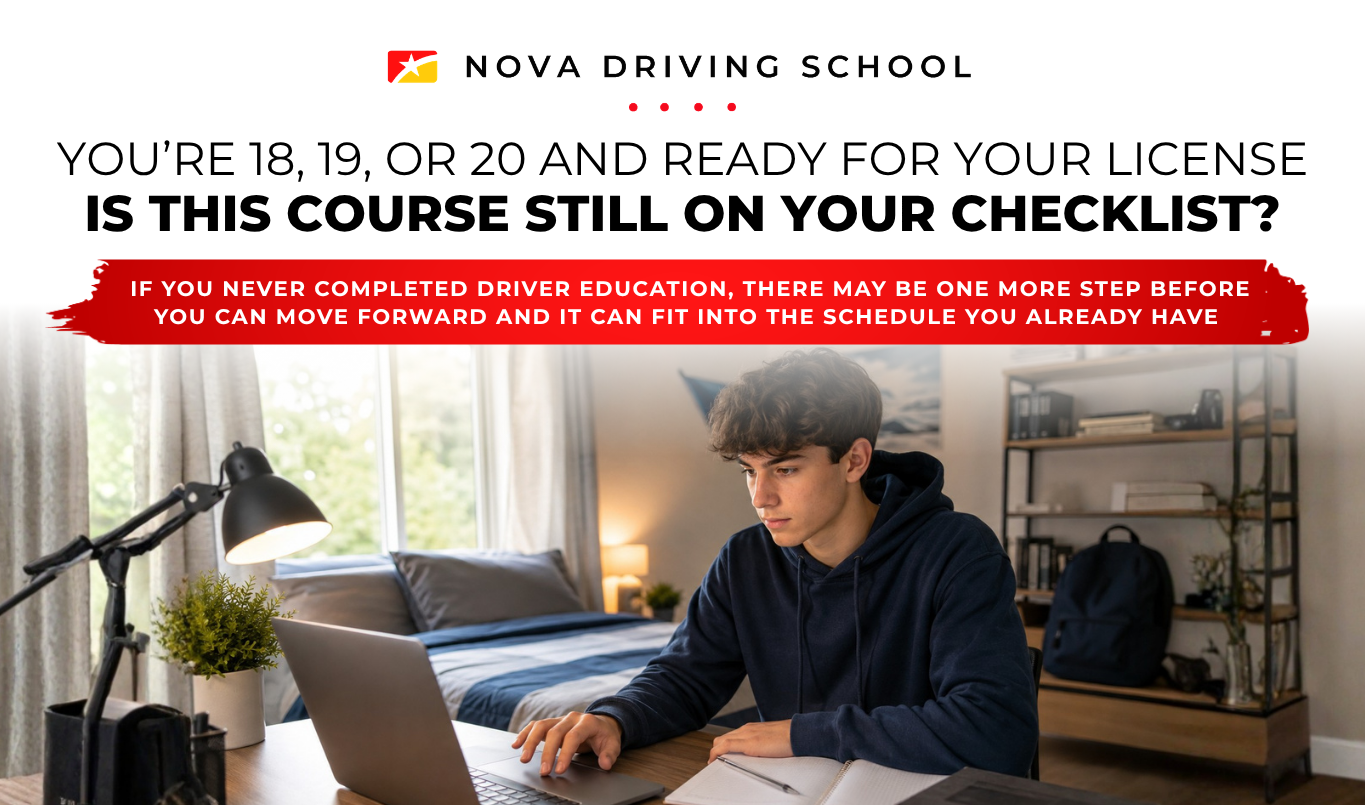
You’re 18, 19, or 20 and Ready for Your License. Is This Course Still on Your Checklist?

At 18, 19, or 20, life can change quickly. Maybe you’ve started college, taken on more hours at work, begun looking for a better job, or reached the point where relying on family, friends, rideshares, or public transportation is making your routine more complicated than it needs to be. Getting your driver’s license starts to feel less like something you might do eventually and more like something that could make everyday life considerably easier.

So you decide you’re ready to move forward. You start researching what you need, thinking about driving practice and eventually picturing yourself taking the road test. Then you discover something you weren’t expecting: because you didn’t previously complete Driver Education, there may still be an Adult Driver Education requirement on your path to getting licensed in Illinois.

For 18-, 19-, and 20-year-olds who haven’t previously completed Driver Education, the 6-Hour Adult Driver Education Course is an important part of that process. Discovering another requirement can feel frustrating when you’re ready to move ahead, especially when your schedule is already packed. But completing the course doesn’t have to mean reorganizing your entire week around another classroom.

You Didn’t Take Driver Education Before. What Happens Now?

Not everyone follows the same path toward a driver’s license. 

Some people complete Driver Education during high school and begin driving as teenagers, others don’t need or want a license at that age, because transportation may not have been a priority, their circumstances may have been different, or they may simply have decided to wait.

There’s nothing unusual about starting later. What matters now is understanding which steps apply to your situation.

If you’re 18, 19, or 20 years old in Illinois and have not previously completed Driver Education, the required 6-Hour Adult Driver Education Course gives you the education component you still need as you continue working toward your license.

The course isn’t about treating you like a high school student starting from the beginning, at this stage, the focus is on giving you important knowledge about safe driving, Illinois traffic laws, and the responsibilities that come with getting behind the wheel.

Once you know this requirement exists, the question becomes much simpler: How can you complete it without putting everything else on pause?

Your Schedule Is Already Full. Your Driving Goal Doesn’t Have to Wait.

This is where learning as a young adult looks very different from taking Driver Education during high school. At 18, 19, or 20, you may already be managing several responsibilities at once. 

A college student may be moving between classes, studying, working part-time, and commuting. 

Someone who went directly into the workforce may have shifts that change every week. 

Others may be helping their families, taking care of personal responsibilities, or doing all of those things at the same time.

Adding another fixed classroom schedule isn’t always realistic.

That’s why the format of the course matters. Nova is an Illinois-approved online provider, and the 6-Hour Adult Driver Education Course is designed to be completed online, at your own pace. It’s also mobile-friendly, which gives students more flexibility in deciding when and where they work through the material.

Instead of waiting until you suddenly have six free hours in your calendar, you can make progress around the routine you already have, that might mean completing part of the course after work, continuing between other responsibilities, or working through it when you have time during the week.

The point isn’t to rush through six hours. It’s to remove the idea that your schedule has to become completely clear before you can start moving toward your license.

What Comes After the Six Hours?

Completing Adult Driver Education is one part of the journey, not the entire journey. Your next steps depend on where you currently are in the licensing process and how much driving experience you already have.

Some students finish the course and still need significant behind-the-wheel practice because they’re learning to drive for the first time. 

Others may already have some experience and need to focus on specific skills before eventually preparing for their road test.

This is why it helps to think of getting your license as a sequence rather than one big task, you don’t need to solve everything at once, complete the requirement that’s in front of you, continue developing your driving skills, and move toward the next stage when you’re ready.

For someone juggling school or work, that approach can make the entire process feel much less overwhelming. Instead of asking, “How am I going to find time to get my license?”, you can focus on a much more manageable question: “What’s the next thing I need to complete?”

Right now, that next thing might simply be your six-hour course.

Don’t Let One Unfinished Requirement Keep Your Goal on Hold

If getting your driver’s license has become more important because of college, work, your commute, family responsibilities, or simply wanting greater independence, you don’t need to wait for life to become less busy before you begin.

Your routine may be full, but you can still make progress.

Nova’s 6-Hour Adult Driver Education Course gives eligible 18-, 19-, and 20-year-old Illinois students an online, self-paced way to complete this important education requirement while continuing with the responsibilities they already have.

If Adult Driver Education is the unfinished item on your license checklist, take care of that step now so you can keep moving toward the one that matters most: getting on the road.

Your schedule doesn’t have to stop for your driving journey to move forward.

Visit novadriving.com to learn more about Nova’s online 6-Hour Adult Driver Education Course and get started.

Uncategorized

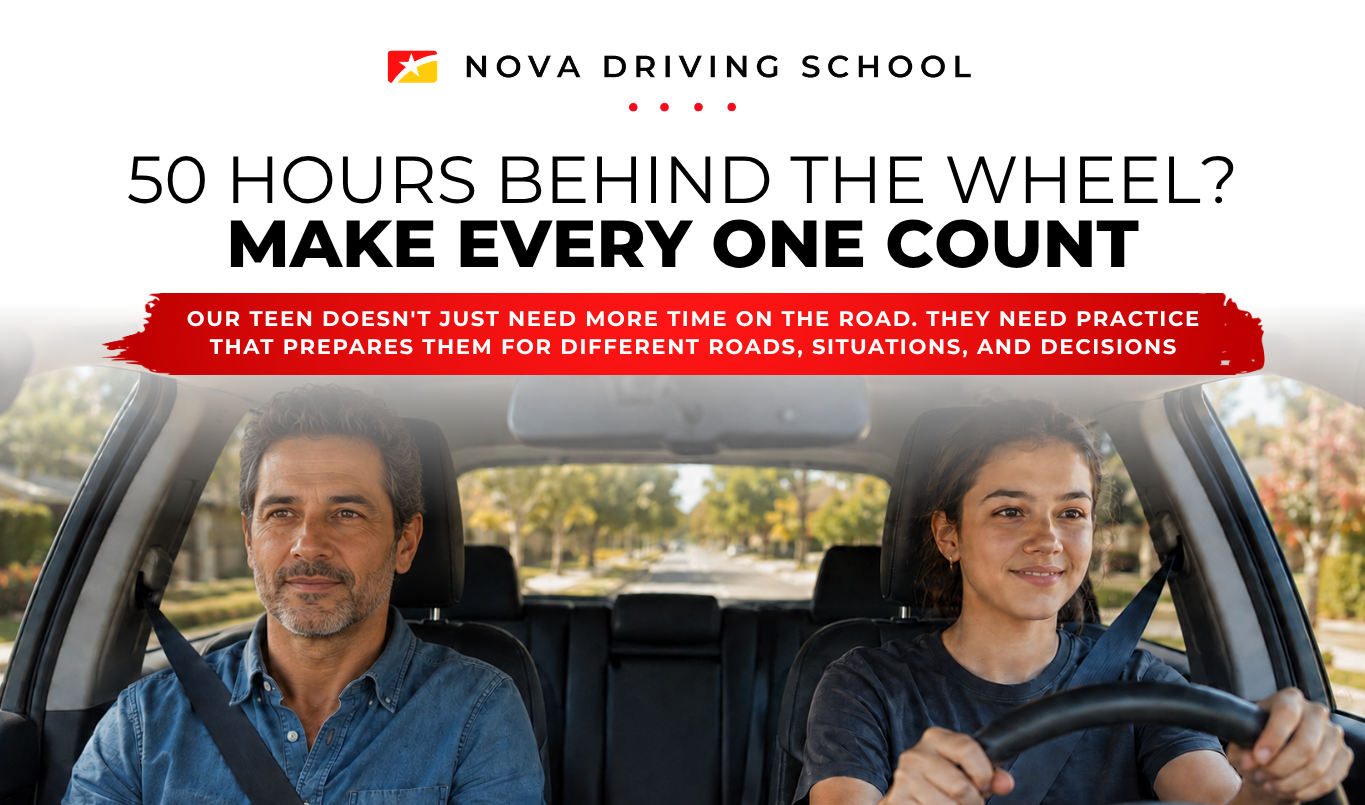
50 Hours Behind the Wheel. Make Every One Count.

When your teen starts supervised driving practice, it’s easy to focus on the number. You keep track of each drive, add the minutes or hours to the log, and slowly watch the total grow. 

Reaching the required amount of practice feels like an important milestone and it is but there’s another question parents should be asking along the way: What is my teen actually experiencing during those hours?

Driving the same familiar route several times can certainly help a new driver become more comfortable behind the wheel, but comfort on one route isn’t the same as being prepared for the variety of situations they’ll eventually encounter on their own. A teen might feel completely at ease driving from home to school and still hesitate when they reach a busy intersection they’ve never seen before, need to change lanes in heavier traffic, have to park in a crowded lot, or drive after sunset.

That’s why supervised driving practice should be about more than completing a number. 

Those hours are an opportunity to gradually introduce your teen to the situations they’ll need to handle when there is no longer a parent or instructor sitting beside them.

Don’t Let Every Practice Drive Look the Same

Think about the last few times your teen practiced. Did you take the same neighborhood streets? Drive to the same grocery store? Practice at approximately the same time of day? There’s nothing wrong with starting in familiar environments, in fact, familiar roads can be extremely useful when a student is developing basic vehicle control because they reduce the number of unfamiliar variables the teen has to process at once.

The problem comes when familiar routes become the only routes.

As your teen becomes more comfortable, practice should gradually become more varied. 

A quiet residential street teaches different skills than a multilane road, a simple right turn is different from navigating a larger intersection. 

An empty parking lot feels very different from finding a space while other vehicles and pedestrians are moving around you. 

Driving on a clear Saturday morning doesn’t prepare a student for everything they may encounter after sunset or during a busier weekday commute.

The goal isn’t to make every practice drive difficult. It’s to make each stage of practice slightly more useful than the one before it.

Start Thinking in Skills, Not Just Hours

One simple way parents can make supervised practice more intentional is to stop planning around time and start planning around skills. Instead of saying, “We need to get another hour of driving today,” decide what that hour could help your teen practice.

When practice has a purpose, the conversation after each drive becomes more useful too, instead of simply recording another hour, you can ask: What felt easier today? What was difficult? What should we practice again next time?

Your Teen’s Weak Spots Can Tell You What to Practice Next

Not every skill develops at the same speed. 

A teen may become comfortable making turns fairly quickly but need much more repetition with parking. Another may control the vehicle well but hesitate when deciding when to enter an intersection. 

Someone else may drive comfortably on neighborhood streets but become tense when traffic gets heavier.

Those differences are useful information, they tell you where the next practice session should focus.

Parents don’t need to turn every drive into a test or constantly point out mistakes. In fact, too much correction at once can make it harder for a new driver to process what’s happening around them. Instead, pay attention to patterns. If the same situation continues to cause difficulty across several drives, that may be a skill worth practicing intentionally.

It can also be a sign that professional guidance would be useful, sometimes a student needs a different explanation, a structured exercise, or the perspective of an instructor who can identify what is causing the difficulty.

That’s where additional Behind-the-Wheel instruction can complement the practice teens are already doing at home.

The Goal Isn’t to Finish the Hours. It’s to Be Ready for What Comes After Them.

Eventually, your teen won’t have someone sitting beside them reminding them to check an intersection or helping them decide when it’s safe to change lanes, they’ll be driving to school, work, activities, appointments, or a friend’s house and making those decisions independently.

That’s what those supervised hours are really preparing them for.

So while keeping track of practice time matters, the number shouldn’t be the only measure of progress. 

Look at the experiences your teen is accumulating along with those hours: Have they driven on different types of roads? Have they practiced during different times of day? Can they handle intersections, lane changes, parking, traffic, and unfamiliar routes with increasing independence? Are there specific situations that still need more attention?

If the answer reveals a weak area, that’s not a failure. It’s exactly what supervised practice is designed to uncover while there’s still someone beside them to help.

Make the Next Practice Drive Count

If your teen is already working through their supervised driving practice, don’t worry about making every drive perfect. 

Instead, make it purposeful!Choose a skill, change the environment when they’re ready, pay attention to what still feels difficult, and use those observations to plan what comes next.

And when there’s a particular skill that could benefit from professional guidance, Nova’s additional Behind-the-Wheel lessons can help your teen work specifically on the areas that need more attention.

Because the real goal isn’t simply reaching the end of a practice log.

It’s making sure the experience behind those hours prepares your teen for the moment they’re driving on their own.

Visit novadriving.com to learn more about Nova’s Behind-the-Wheel lessons and additional driving practice for teen drivers.

Uncategorized

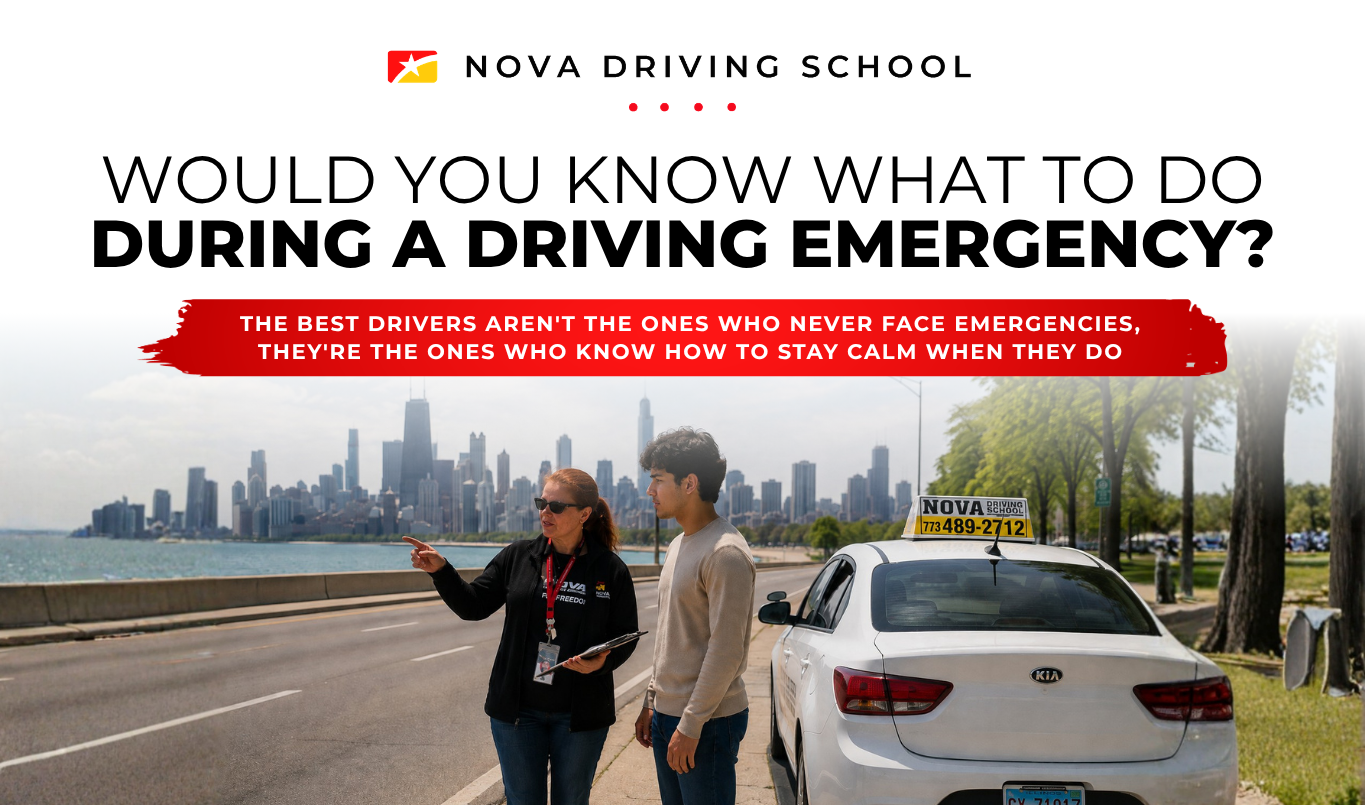
Would You Know What To Do During A Driving Emergency?

Picture this.

You’re driving home after work.

Traffic is moving normally.

You’re listening to your favorite playlist.

Then, without warning, something changes.

Maybe a tire blows out.

Maybe your engine suddenly loses power.

Maybe another driver makes an unexpected move that forces you to react.

What would you do?

Would you stay calm?

Would you know the safest next step?

Or would panic take over? The truth is, most drivers hope they’ll never face an emergency on the road.

But hoping isn’t the same as being prepared, and the drivers who handle emergencies the best aren’t necessarily the most experienced, they’re the ones who know what to do before the unexpected happens.

Emergencies Can Happen to Anyone

One of the biggest misconceptions about driving is believing that emergencies only happen to inexperienced drivers.

They don’t.

Even people who have been driving for decades can experience unexpected situations.

A flat tire.

Heavy rain that suddenly reduces visibility.

A vehicle that stalls in traffic.

Brake failure.

A battery that dies in a parking lot.

An aggressive driver cutting you off.

None of these situations are planned.

That’s why preparation matters so much.

Your First Reaction Matters More Than You Think

When something unexpected happens, your brain has only a few seconds to respond.

If you’ve never thought about what you would do, your first reaction may be based on fear instead of good judgment.

That’s completely normal.

But it’s also something you can improve.

Knowing how to react before an emergency happens allows you to stay focused, make safer decisions, and reduce unnecessary stress.

Confidence doesn’t come from hoping everything goes perfectly.

Confidence comes from knowing you’re prepared if it doesn’t.

Common Driving Emergencies Every Driver Should Understand

While every situation is different, there are a few emergencies that every driver should be familiar with.

Flat Tire: Would you know how to safely pull over without losing control?

Brake Problems: Do you know what to do if your brakes don’t respond the way they should?

Engine Trouble: If your vehicle suddenly loses power, would you know where to stop safely?

Poor Weather: Heavy rain, snow, or ice can completely change the way your vehicle responds.

Would you know how to adjust?

Aggressive Drivers: Sometimes the safest decision isn’t reacting, it’s creating distance and staying calm.

These situations don’t happen every day.

But when they do, knowing how to respond can make a significant difference.

The Best Drivers Never Stop Learning

Getting your driver’s license is an important milestone.

But it’s only the beginning.

Every year, experienced drivers continue learning new skills that make them safer on the road.

The more situations you understand, the more confident you’ll feel behind the wheel.

Safe driving isn’t about knowing everything.

It’s about being willing to keep learning.

Why Nova Created This Free Class

At Nova, we believe education shouldn’t stop after someone earns a driver’s license.

That’s why we created The Survivor’s Guide: How to Handle Driving Emergencies With Confidence.

This free educational class is designed to help drivers understand what to do when unexpected situations happen on the road.

You’ll learn practical strategies, safety tips, and simple techniques that can help you stay calm and make smarter decisions under pressure.

Whether you’re a brand-new driver, a parent with a teen driver, or someone who has been driving for years, this class offers valuable information that every driver should know.

Because the goal isn’t to scare you.

The goal is to prepare you.

Confidence Begins Before the Emergency

Most people never expect an emergency.

But the smartest drivers prepare anyway.

You can’t control every situation on the road.

You can control how prepared you are to respond.

Sometimes, learning one simple technique today can help you make a safer decision tomorrow.

And that’s exactly why this class exists.

Join Our Free Educational Class

The Survivor’s Guide: How to Handle Driving Emergencies With Confidence

This free class will help you understand how to respond calmly, think clearly, and make safer decisions when unexpected situations happen behind the wheel.

Whether you’re learning to drive, recently earned your license, or simply want to become a more confident driver, we’d love to have you join us.

📅 Discover how preparation creates confidence.

Uncategorized

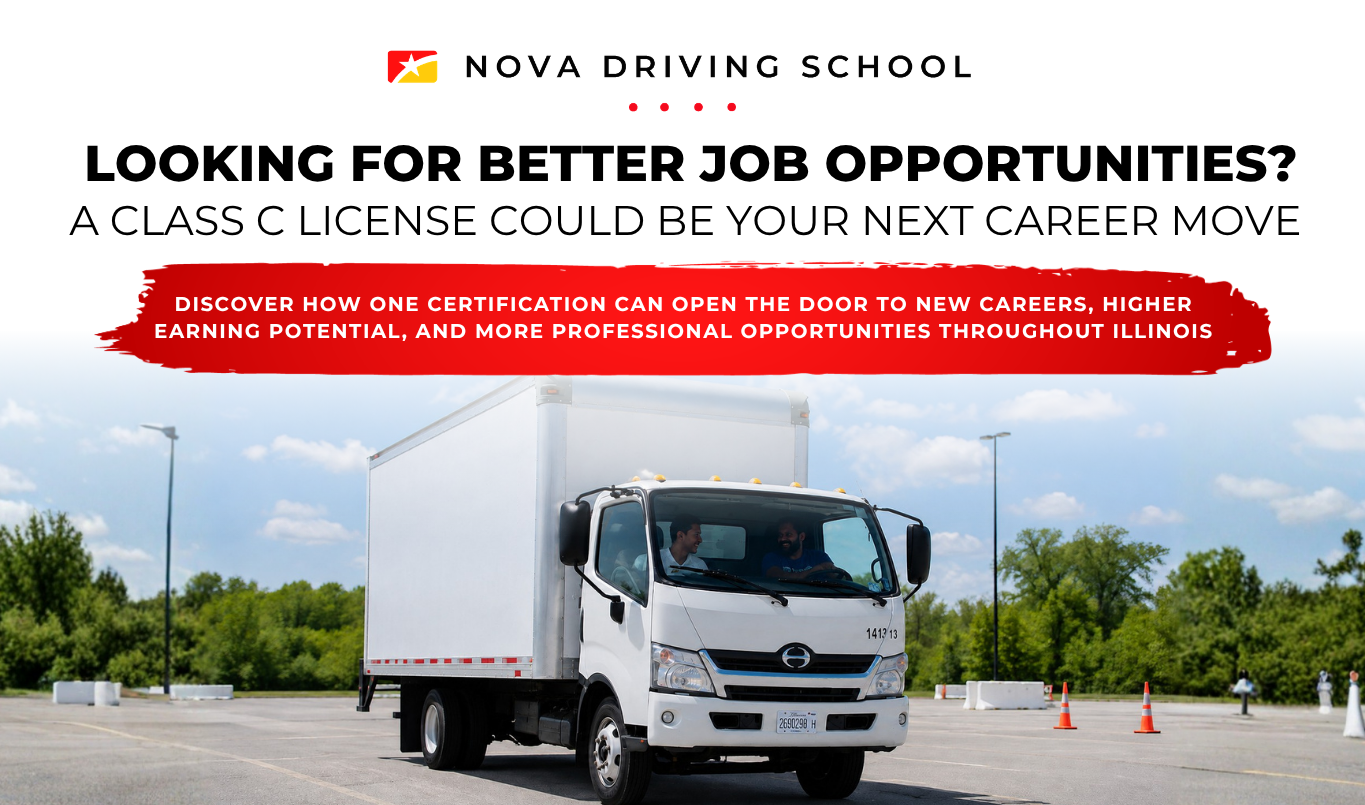
Looking for Better Job Opportunities? A Class C License Could Be Your Next Career Move

If you’ve been thinking about changing careers, increasing your income, or simply creating more opportunities for yourself, you’re not alone.

Many people reach a point where they realize they want something more.

Maybe you’re looking for a job with better pay.

Maybe you’re tired of limited opportunities.

Or maybe you simply want a skill that makes your resume stand out.

The good news is that sometimes one new qualification can make a much bigger difference than people expect.

A Class C License is one of those qualifications.

While many people have heard the name, very few understand the opportunities it can create.

Let’s take a closer look.

More Than Just Another License

When people hear “Class C License,” they often assume it’s simply another driving credential.

In reality, it’s much more than that.

A Class C License allows qualified drivers to operate certain types of passenger vehicles that require additional responsibility and professional training.

For employers, it shows something important.

It tells them you’re willing to develop specialized skills and meet higher professional standards.

That alone can make you a stronger candidate when applying for transportation-related positions.

More Opportunities Means More Choices

One of the biggest advantages of earning a Class C License is flexibility.

Instead of limiting yourself to one type of driving position, you may qualify for a wider variety of transportation careers, depending on the employer and job requirements.

Some examples include:

• Passenger transportation services

• Airport shuttle companies

• Hotel transportation

• Medical transportation

• Community transportation programs

• Private transportation companies

For many people, this isn’t just another job.

It’s the beginning of a new career path.

Employers Value Candidates Who Are Already Prepared

Think about it from an employer’s perspective.

If two applicants have similar experience, but only one already holds a Class C License, who do you think has the advantage?

Preparation matters.

Employers often prefer candidates who can begin working sooner without waiting for additional licensing or training.

By earning your license before applying, you’re investing in yourself before the opportunity even appears, and that’s exactly what successful professionals do.

A Small Investment That Can Pay Off for Years

Many certifications lose value over time.

A Class C License is different.

It can continue creating opportunities throughout your career.

Whether you’re looking for full-time employment, part-time work, or simply another source of income, having additional qualifications gives you more flexibility when the job market changes.

It’s not just about today’s opportunities.

It’s about preparing for tomorrow’s.

Why Now Is a Great Time to Start

Many transportation companies increase hiring before the busiest travel seasons.

That means waiting until opportunities appear may actually put you behind other applicants who already have the required credentials.

Starting your training now allows you to be prepared when hiring begins.

Instead of rushing to qualify later, you’ll already be ready to apply.

Invest in Yourself Before Opportunity Knocks

One of the best career decisions you can make is preparing before you actually need the opportunity.

Skills create options.

Certifications create opportunities.

Confidence helps you take advantage of both.

A Class C License isn’t simply another credential to add to your resume.

It’s an investment in your future.

And sometimes, one decision today can create opportunities for years to come.

Ready to Take the Next Step?

Nova’s Class C License Program is designed to help students understand the licensing process, build the necessary skills, and prepare for new career opportunities with confidence.

If you’re ready to invest in yourself and expand your professional options, we’d love to help you get started.

Contact Nova today to learn more about upcoming Class C License classes and enrollment availability.

Uncategorized

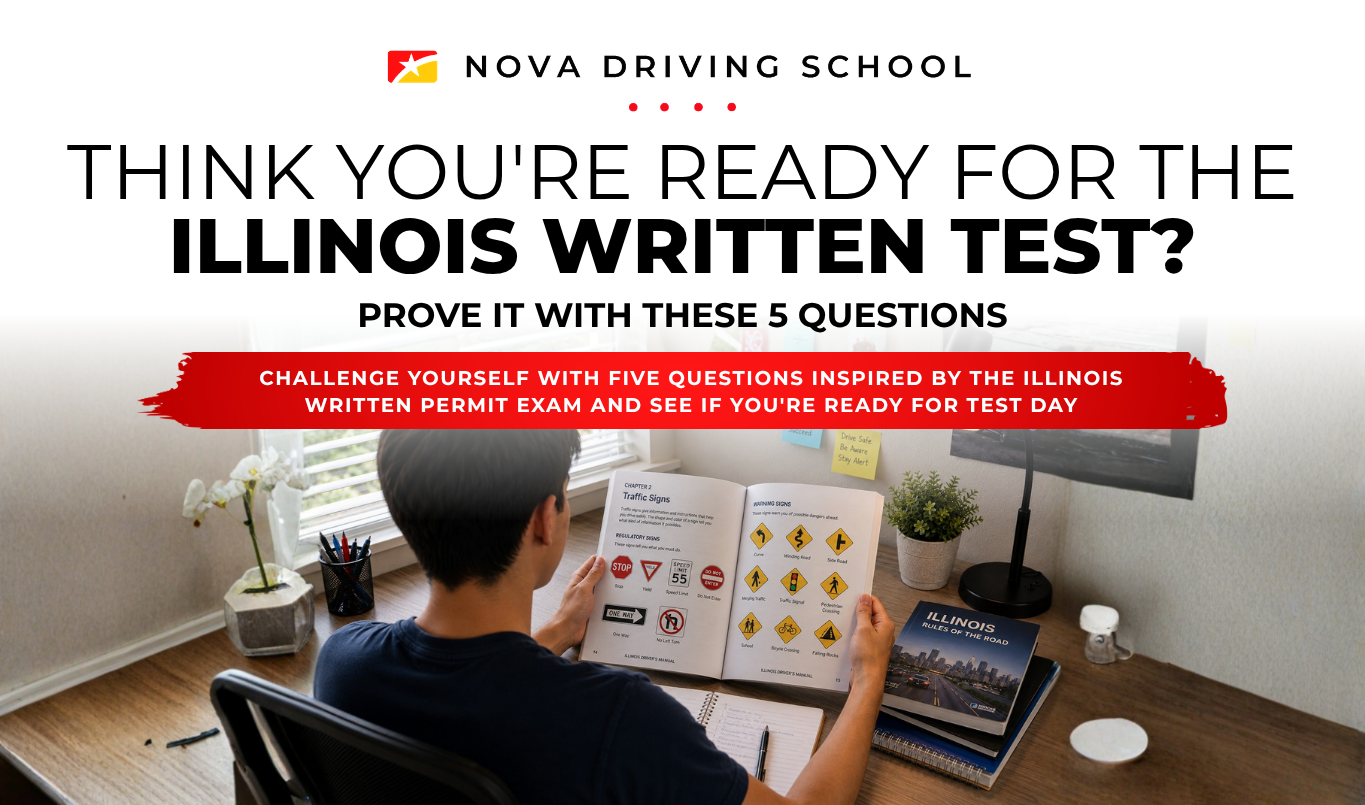
Think You’re Ready for the Illinois Written Test? Prove It With These 5 Questions

If you’re getting ready to take your Illinois written permit test, you’ve probably asked yourself one important question:

“Am I actually ready?”

Maybe you’ve read the Rules of the Road manual.

Maybe you’ve watched a few videos online.

Maybe you’ve even taken a couple of practice quizzes.

But when you’re sitting at the DMV, looking at that first question on the screen, it feels completely different.

The good news? The Illinois written test isn’t designed to trick you.

It’s designed to make sure you understand the rules that help keep everyone safe on the road.

Before you schedule your exam, challenge yourself with these five questions inspired by the types of situations you’ll encounter on the real test.

No pressure. No grades. Just a chance to see how prepared you really are.

Question 1: You’re approaching an intersection and the traffic light turns yellow. What should you do?

A. Speed up before it turns red.

B. Stop if you can do so safely.

C. Continue driving without slowing down.

D. Honk to warn other drivers.

✅ Correct Answer: B. Stop if you can do so safely.

Why? A yellow light doesn’t mean “go faster.”

It means the light is about to change, and drivers should prepare to stop safely whenever possible.

Question 2: Before changing lanes, what should you always do?

A. Check your mirrors only.

B. Signal after changing lanes.

C. Check your mirrors, signal, and check your blind spot.

D. Speed up first.

✅ Correct Answer: C. Check your mirrors, signal, and check your blind spot.

Why? Checking your blind spot is one of the most important habits you’ll develop as a driver.

Many road test failures happen because students forget this simple step.

Question 3: What does a flashing red traffic signal mean?

A. Slow down and continue.

B. Stop completely before proceeding when safe.

C. The light is broken.

D. Yield only if another vehicle is approaching.

✅ Correct Answer: B. Stop completely before proceeding when safe.

Why?A flashing red light should always be treated like a stop sign.

Come to a complete stop before moving forward.

Question 4: When should you use your turn signal?

A. Only when other cars are nearby.

B. Only when changing lanes.

C. Before every turn and lane change.

D. Only at intersections.

✅ Correct Answer: C. Before every turn and lane change.

Why? Turn signals help everyone around you understand your intentions and reduce the risk of collisions.

Question 5: What should you do if an emergency vehicle with flashing lights approaches from behind?

A. Continue driving normally.

B. Speed up.

C. Pull over safely and stop.

D. Stop immediately in the middle of the road.

✅ Correct Answer: C. Pull over safely and stop.

Why? Illinois law requires drivers to safely move over and allow emergency vehicles to pass.

Staying calm and reacting correctly helps protect first responders and everyone else on the road.

How Did You Score?

⭐ 5 out of 5

Excellent! You’re building a strong foundation for the written test.

Keep reviewing the Rules of the Road manual and continue practicing.

⭐ 3–4 out of 5

You’re getting close, a little more studying and a few more practice questions can make a big difference before test day.

⭐ 0–2 out of 5

Don’t worry, everyone starts somewhere.

Now you know which areas need a little more attention before taking the real exam.

The goal isn’t to memorize answers.

The goal is to understand the rules that will help you become a safe and confident driver.

Want to Feel Even More Prepared?

At Nova Driving School, we help students prepare for every step of the licensing process, including the Illinois written permit exam.

Whether you’re a teen getting your first permit or an adult beginning your driving journey, our instructors can help you understand the rules, build confidence, and prepare for success.

Learning the rules is the first step.

Learning how to apply them safely is what makes you a better driver.

Ready to get started? Contact Nova today to learn more about our Teen Driver Education and Adult Driver Education programs.

Uncategorized

Back-to-School Is Almost Here. Is Your Teen Ready for More Independence?

Every August has a different kind of energy.

Stores fill up with backpacks, notebooks, and school supplies. Parents start checking class schedules, students reconnect with friends after summer break, and calendars slowly begin filling up again.

For many families, it’s the unofficial countdown to a brand-new school year.

But for teenagers, August often brings another exciting milestone.

They begin hearing conversations like…“I finally got my permit.” “I’m taking my road test next month.” “My parents are letting me drive to school this year.”

Little by little, driving becomes part of everyday conversations.

Some teens can’t wait to get behind the wheel, and others feel excited but nervous.

And some quietly wonder if they’re already falling behind because everyone else seems to be getting their license first.

Here’s what we want every family to know: There is no “perfect” timeline for learning to drive.

Every student learns at a different pace, but there is one thing we see every single year.

Families who begin before the school year starts usually have a much smoother experience than those who decide to wait.

Life Changes Fast Once School Begins

Think about your family’s schedule for a moment.

Right now, summer probably feels a little more flexible.

Maybe your teen has a part-time job.

Maybe there are vacations, sports camps, or afternoons spent with friends.

Even with a busy summer, there’s usually a little more breathing room.

Then school starts: homework becomes a priority, sports practices begin, clubs meet after school, weekend plans disappear and before long, finding time for driving lessons becomes another challenge on an already packed calendar.

We hear the same sentence almost every fall.

“We should have started in August.”

Not because learning to drive suddenly becomes harder.

But because life simply gets busier.

It’s Not About Driving to School

A lot of people think teenagers want a driver’s license because they want to drive to school, that’s only part of the story, what they’re really looking for is something much bigger: Freedom, Responsibility and Confidence.

What they want is the ability to say yes when friends invite them somewhere, the chance to drive to their first job and the excitement of running an errand on their own.

Those moments might seem small, but they’re often the first real taste of independence and parents notice it too.

One of the most common things we hear after a student’s first few lessons isn’t, “They’re already a great driver.”

It’s something much more meaningful. “They’re so much more confident than they were before.”

Because learning to drive isn’t just about operating a vehicle, It’s about learning how to stay calm, make decisions, solve problems, and take responsibility.

Those lessons extend far beyond the driver’s seat.

Confidence Doesn’t Happen Overnight

One of the biggest misconceptions about learning to drive is believing that confidence comes naturally.

It doesn’t, confidence is built, with lesson by lesson, turn by turn, mistake by mistake.

Every new driver starts exactly the same way: A little nervous, a little unsure and wondering if they’ll ever feel comfortable behind the wheel.

The good news? Almost every student leaves their first lesson feeling far more confident than when they arrived.

Not because they suddenly became expert drivers…But because they realized something important: “I can actually do this.” Sometimes that’s all it takes to change everything.

Parents Want More Than a Driver

For parents, teaching a teen to drive isn’t just another item on the to-do list.

It’s emotional.

You want them to be safe.

You want them to make smart decisions.

You want them to feel confident without becoming overconfident.

That’s why choosing the right learning environment matters.

Driving lessons should never feel rushed or intimidating.

They should build trust, encourage good habits, and help students become responsible drivers for life, not just for test day.

Start the School Year One Step Ahead

Imagine your teen beginning the school year already feeling more confident, more responsible, and one step closer to earning their driver’s license.

Instead of saying,

“I’ll start later…” they’ll already be building experience behind the wheel.

Small steps today create big confidence tomorrow, and before they know it, they’ll be ready for one of the biggest milestones of their teenage years.

Give Your Teen a Head Start This School Year

August is one of the best times to begin driving lessons before schedules become full and routines become busier.

At Nova Driving School, our Teen Driver Education Program helps first-time drivers develop safe driving habits, build confidence behind the wheel, and prepare for success every step of the way.

Whether your teen has never driven before or is getting ready for the next stage of their driver’s education journey, we’re here to help them feel confident from day one.

📅 Ready to get started? Contact Nova today to learn about our upcoming Teen Driver Education classes and reserve your teen’s spot before the school year begins.

Uncategorized

Are You Really Ready for Your Illinois Road Test? Take This 5-Question Quiz

Most people assume they’re ready for their road test because they’ve been driving for a while.

The problem? The Illinois road test isn’t designed to measure how comfortable you feel behind the wheel.

It’s designed to evaluate whether you’re a safe, consistent, and responsible driver.

That’s why many students are surprised when they don’t pass on their first attempt.

Before you schedule your test, take this quick quiz and answer honestly.

Let’s find out if you’re truly ready.

Question 1

Can you consistently come to a complete stop behind the stop line every single time? Not most of the time, every time.

Many road tests are failed because students perform rolling stops without realizing it.

If you’re unsure whether you always stop correctly, that’s a sign you may need additional preparation.

If your answer is:

✅ Yes = 1 point

❌ No = 0 points

Question 2

Do you automatically check your mirrors and blind spots before changing lanes? Examiners pay close attention to this habit.

Many students know they should do it but forget when they’re nervous.

The key is making it automatic.

If your answer is:

✅ Yes = 1 point

❌ No = 0 points

Question 3

Can you parallel park confidently without multiple corrections? You don’t need perfection.

However, you should feel comfortable parking without panic or guessing.

If parallel parking still causes stress, it’s worth practicing before test day.

If your answer is:

✅ Yes = 1 point

❌ No = 0 points

Question 4

Have you practiced driving in the same type of environment where you’ll take your road test? Many students practice only in familiar neighborhoods.

Then they become overwhelmed when driving in an unfamiliar testing area. Remember that practice should simulate real test conditions whenever possible.

If your answer is:

✅ Yes = 1 point

❌ No = 0 points

Question 5

If an examiner asked you to take your road test tomorrow, would you feel calm and prepared? Your first instinct usually tells the truth.

Confidence doesn’t guarantee success, but confidence combined with proper preparation is a strong indicator of readiness.

If your answer is:

✅ Yes = 1 point

❌ No = 0 points


Your Score

5/5

You’re likely ready for your road test.

Keep practicing and stay consistent.

3–4/5

You’re close.

A few targeted improvements could significantly increase your chances of passing.

0–2/5

You may benefit from additional preparation before scheduling your test.

Identifying weaknesses now can save you time, money, and frustration later.

Want a Professional Assessment?

Nova’s Road Test Readiness Assessment is designed specifically for students who want an honest evaluation before test day.

During this 30-minute session, one of our instructors will assess your driving skills, identify any potential issues, and provide clear feedback on whether you’re ready to take the Illinois road test.

You’ll leave knowing exactly where you stand—and exactly what to improve.

Sometimes one assessment can make the difference between passing and failing.

Ready to find out?

Book your Road Test Readiness Assessment today and drive into your road test with confidence. 🚗

Uncategorized

3 Reasons Why Getting Your Chauffeur License This Summer Is a Smart Move

Summer is often seen as a time to relax, travel, and enjoy longer days.

But for many people, it’s also the perfect time to invest in themselves and prepare for new career opportunities.

If you’ve been looking for a way to expand your qualifications, increase your earning potential, or enter the transportation industry, obtaining your Chauffeur License could be one of the smartest decisions you make this year.

Here are three reasons why.

1. Summer Gives You Time To Prepare Before Hiring Season

Many transportation companies increase hiring before the colder months.

As winter approaches, demand grows for professional drivers in services such as:

  • Airport transportation
  • Executive transportation
  • Medical transportation
  • Shuttle services
  • Private transportation companies

Employers often prefer candidates who already hold the required credentials.

By completing your Chauffeur training during the summer, you’ll be ready when those opportunities begin to appear.

Instead of rushing to get certified later, you’ll already have a competitive advantage, think of summer as your preparation season.

2. A Chauffeur License Can Open New Career Opportunities

Many people don’t realize how versatile a Chauffeur License can be.

Depending on your goals, it can help you qualify for positions involving:

  • Executive transportation
  • Limousine services
  • Corporate transportation
  • Hotel transportation services
  • Passenger transportation businesses

For some individuals, this becomes a full-time career and for others, it’s a valuable side income opportunity.

Either way, it expands your options, and in today’s economy, having more options is always a good thing.

3. You’ll Stand Out From Other Applicants

When employers compare candidates, certifications matter, a Chauffeur License demonstrates:

✅ Responsibility

✅ Professionalism

✅ Specialized training

✅ Commitment to safety

It shows that you’re willing to invest in your skills and meet industry requirements.

Those qualities are valuable regardless of the company you’re applying to.

The reality is simple: Most people wait until opportunities appear before preparing, but successful people prepare before opportunities arrive.

Final Thoughts

The best time to improve your qualifications isn’t when you need them.

It’s before you need them.

By earning your Chauffeur License this summer, you’ll be positioned to take advantage of opportunities that may become available later in the year—especially as transportation demand increases during the fall and winter seasons.

Whether you’re looking for a new career path, additional income opportunities, or a professional advantage, this certification can help you get there.

Ready to Get Started?

Nova’s Chauffeur Program provides the training and guidance you need to earn your license and move toward new opportunities with confidence.

Contact us today to learn more about upcoming classes and available enrollment dates.