User
User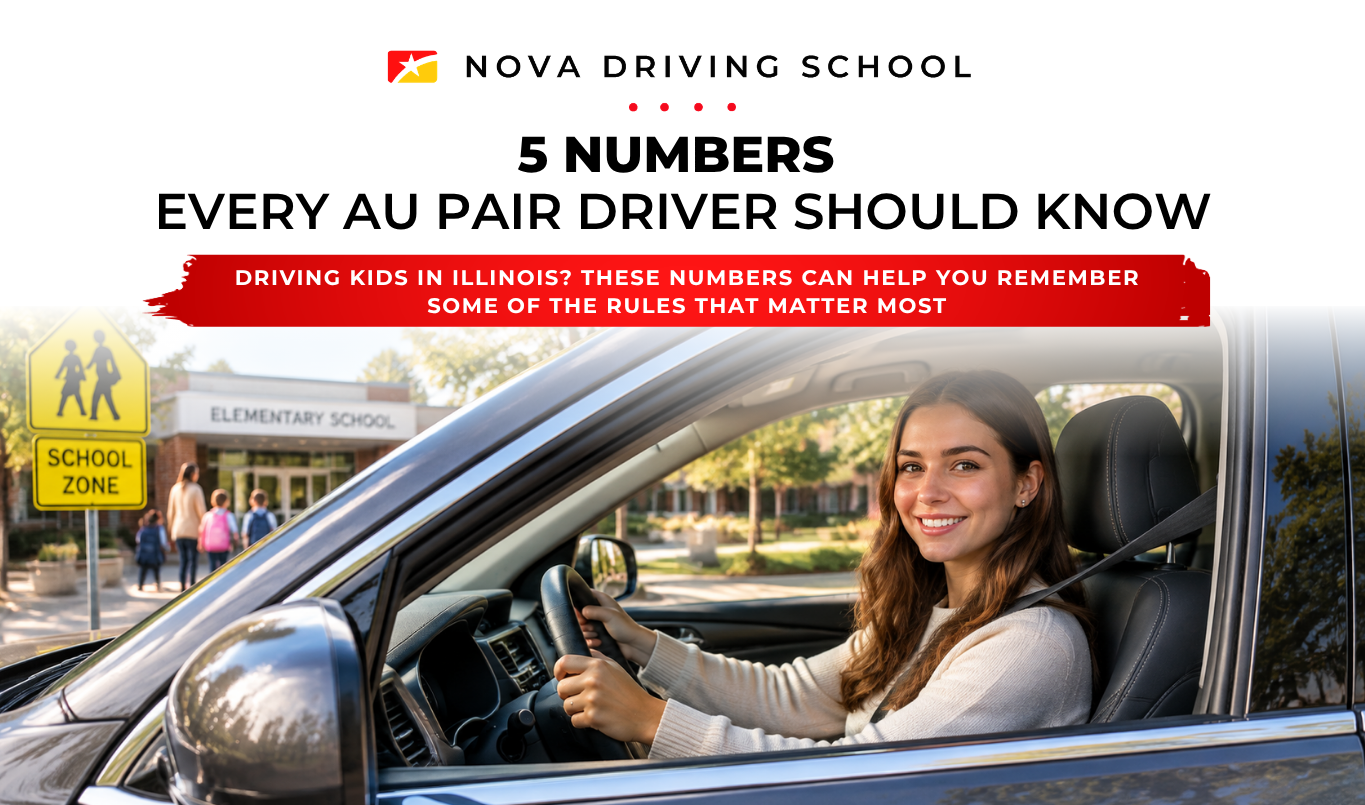
You already know how to drive, but now you’re in Illinois, the family has handed you the car keys, and part of your routine may include school drop-offs, pickups, soccer practice, playdates, appointments, and errands with children in the car.
That’s when a few numbers become especially important.
Some driving rules may be different from what you’re used to in your home country, and others are particularly relevant when children are your passengers.
So before your next school run, here are five numbers worth remembering.
1. 20 MPH: Think School Zones
If school pickup and drop-off are part of your Au Pair routine, 20 mph is a number you should recognize immediately.
In Illinois, the school-zone speed limit is 20 mph on school days between 6:30 a.m. and 4 p.m. when children are present and the appropriate signs are posted. Local conditions and posted signs still matter, so always pay attention to the specific road you’re driving on.
Why is this especially important for an Au Pair? Because school zones can be some of the busiest parts of your driving routine, you may have children crossing the street, parents stopping, school buses arriving, crossing guards directing traffic, and cars entering or leaving at the same time.
Au Pair Tip: Don’t wait until you reach the school entrance to start paying attention. Look ahead for school-zone signs and reduce your speed appropriately before entering the area.
And remember: the posted speed limit is a maximum under safe conditions, not a speed you must maintain regardless of traffic, pedestrians, or weather.
2. 30 MPH: A Number You’ll See Around Town
Under Illinois’ general speed limits, city and town areas are 30 mph unless otherwise posted, alleys are generally 15 mph, while higher limits apply to highways and interstates.
Municipalities can also establish different posted limits, which is why the sign in front of you always matters.
For an Au Pair, this is especially relevant because much of your driving may happen on local streets rather than highways.
- Home → school.
- School → activity.
- Activity → grocery store.
- Grocery store → home.
These everyday routes can take you through residential neighborhoods, commercial streets, school areas, and alleys within the same trip.
Quick Tip: Don’t assume the speed limit stays the same just because you’re still in the same neighborhood.
Get into the habit of actively looking for posted speed-limit signs as the road environment changes.
3. 3 Seconds: Don’t Follow Too Closely
How much space should you leave between your vehicle and the one ahead? Instead of trying to estimate a distance in feet while you’re driving, Illinois’ Rules of the Road recommends an easier method: The three-second rule.
Choose a fixed object ahead, such as a road sign or tree. When the vehicle in front passes it, begin counting. Your vehicle shouldn’t reach that same point before approximately three seconds have passed.
And three seconds is for good road and weather conditions.
If conditions aren’t good, Illinois recommends increasing your following distance even more.
That’s particularly important in Chicago, where rain, snow, ice, and reduced visibility can completely change how much time a vehicle needs to stop.
Au Pair Tip: If you’re driving children, smooth driving matters too. More following distance gives you more time to react and can reduce the need for sudden braking.
4. Under 8: Think Child Restraint
If you’re going to drive children as part of your Au Pair responsibilities, this is one of the most important numbers on the list.
In Illinois, children under age 8 must be properly secured in an appropriate child safety restraint system under the Child Passenger Protection Act.
That can include a car seat or booster depending on the child’s age, size, and the manufacturer’s requirements.
There’s an additional rule worth knowing for very young children: children under age 2 must generally ride in a rear-facing child restraint unless they weigh 40 pounds or more or are 40 inches or taller.
Before driving the host family’s children, ask: Which seat belongs to each child? Has it been properly installed? What are the family’s instructions for securing each child?
Never guess because you’re running late, a school pickup can wait another minute. Proper restraint shouldn’t.
5. Through Age 12: The Back Seat Is the Safer Place
Here’s another number that’s particularly relevant when your job includes transporting children.
Illinois’ official child passenger safety guidance recommends keeping children in the back seat at least through age 12.
This is an important distinction: it’s a safety recommendation, not the same thing as saying Illinois law universally prohibits every child 12 or younger from sitting in front.
Air bags are one of the reasons the back seat matters, Illinois’ Rules of the Road warns that children riding in the front can be seriously injured by an air bag and recommends that children 12 and younger be properly secured in the back seat.
For an Au Pair, the simplest habit is to establish the seating plan with the host family before you begin driving regularly.
Bonus Number: 0 Passed School Buses
This isn’t technically a speed or distance, but it’s too important for an Au Pair to overlook.
When a school bus is stopped to receive or discharge students with its required signals activated, Illinois drivers generally must stop and may not proceed until the legal conditions for continuing are met.
If you’re new to driving in the United States, school-bus rules deserve special attention because they may work differently from what you’re accustomed to in your home country.
When you’re regularly driving to schools, parks, activities, and residential neighborhoods, you’re also more likely to encounter buses.
So add one more association to your mental cheat sheet: School bus + active stop signals = STOP.
Your Au Pair Driving Cheat Sheet
Before your next trip with the kids, remember:
- 20 MPH → School zones when applicable
- 30 MPH → General city/town limit unless otherwise posted
- 3 SECONDS → Minimum following-distance rule in good conditions
- UNDER 8 → Appropriate child restraint system required
- THROUGH 12 → Back seat recommended
- 0 → School buses you should try to pass when their stop requirements apply
Knowing these numbers doesn’t replace learning Illinois traffic laws, but they give you a useful starting point for some of the situations you’re likely to encounter while driving children.
And that’s really what adapting to driving as an Au Pair is about.
You don’t need someone to teach you from zero just because you came from another country, you may already be an experienced driver, what you need is the opportunity to understand what’s different here and practice those situations before they become part of your everyday responsibilities.
Nova’s Au Pair Driving Lessons can help you become more familiar with U.S. traffic rules, Chicago-area roads, school zones, parking, intersections, and other situations you may encounter while driving your host family’s vehicle.
Visit novadriving.com to learn more about Nova’s Au Pair Driving Lessons and prepare for the driving routine that comes with your new experience in the U.S.